
Human Development -- a measure of a nation's health, education, and average income -- has declined for two years in a row.

The robust economic growth notwithstanding, India has garnered a lowly 119th rank in the United Nation's Human Development Index due to poor social infrastructure, mainly in areas of education and healthcare.
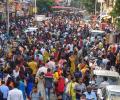
Life expectancy of Indians at birth in 2019 was 69.7 years while Bangladesh has a life expectancy of 72.6 years and Pakistan 67.3 years, the 2020 Human Development Report said.
India's rank in terms of Human Development Index (HDI) stood unchanged at 127 during 2002, with per capita income coming down but literacy rate improving slightly, the United Nations Development Programme said in its report on Thursday.

India also fares poorly on maternal mortality rate.
Like its predecessors, the 2014 report (released two days ago) allows one to compare India's performance with other countries.
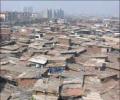
Dharavi, a congested slum located in the heart of India's financial capital Mumbai, said to be the largest slum in Asia, is actually not, a report by the United Nations Development Programme claims.
"Sectarian violence killed thousands of Muslims and drove thousands more from their homes in Gujarat and elsewhere in India, a champion of cultural accomodation," the report said.
Singling out India and China for the impressive growth in recent years, the Human Development Report-2003 of the United Nations Development Programme says bridging regional variations is a key challenge that confronts the two large economies.
In the 2010 Human Development Report, prepared by UNDP, India had been ranked at 119 out of 169 countries.

Three big cities -- Mumbai, Kolkata and Bangalore -- have been rated below average compared to other mega cities in Asia-Pacific in terms of keeping pollution levels in check, said a report of the United Nations Development Programme (UNDP). Delhi is the only Indian city featured in the average category.
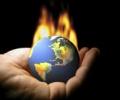
The report argues that in the face of climate change, countries in Asia and the Pacific "will need to change way they manufacture goods, raise crops and livestock and generate energy".
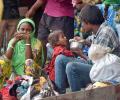
The data, released by the United Nations Development Programme (UNDP) and the Oxford Poverty and Human Development Initiative (OPHI), shows that 65 out of 75 countries studied significantly reduced their multidimensional poverty levels between 2000 and 2019.

India's financial capital which houses the maximum number of slum dwellers in the country has one in two persons residing in a slum, as per a Human Development Report compiled by Brihanmumbai Municipal Corporation (BMC) and the United Nations Development Programme (UNDP).
A United Nations report says it exhibits sensitivity towards People Living with HIV/AIDS (PLWHA).
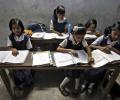
While India's human development index has improved, absolute performance levels aren't satisfactory, says T N Ninan.

A total of 415 million people moved out of poverty in India within just 15 years from 2005/2006 to 2019/2021, the United Nations said on Tuesday, highlighting the remarkable achievement by the world's most populous nation.

'At least we had an asteroid. What's your excuse?'

Bihar, Jharkhand and Uttar Pradesh have emerged as the poorest states in India, according to Niti Aayog's first Multidimensional Poverty Index (MPI) report. As per the index, 51.91 per cent population of Bihar is poor, followed 42.16 per cent in Jharkhand, 37.79 per cent in Uttar Pradesh. While Madhya Pradesh (36.65 per cent) has been placed fourth in the index, Meghalaya (32.67 per cent) is at the fifth spot. Kerala (0.71 per cent), Goa (3.76 per cent), Sikkim (3.82 per cent), Tamil Nadu (4.89 per cent) and Punjab (5.59 per cent) have registered the lowest poverty across India and are at the bottom of the index.

At some stage this fall in the quality of life will begin to hurt anybody's popularity, observes Shekhar Gupta.
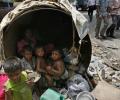
India lifted 271 million people out of poverty between 2006 and 2016, recording the fastest reductions in the multi-dimensional poverty index values during the period with strong improvements in areas such as "assets, cooking fuel, sanitation and nutrition," a report by the United Nations said.
The number of poor people in India fell by about 415 million between 2005-06 and 2019-21, a "historic change" and a demonstration that the Sustainable Development Goal target of reducing at least by half the proportion of men, women and children of all ages living in poverty by 2030 is possible to achieve, even at a large scale, according to the UN.

Sikkim's new chief minister will have to achieve growth without compromising nature.

United Nations leaders and agencies have welcomed the entry of a humanitarian aid convoy into Gaza via the Rafah border crossing with Egypt but noted that it is only a small beginning, still far from enough and reiterated their appeal for an immediate ceasefire.

Giving the slogan of "one earth, many efforts", he said India is ready to lend its support to actions to make environment better and improve global wellness.

Can Baichung Bhutia's Hamro Sikkim party pose a challenge to Pawan Chamling who has not lost an election in 24 years?

The UN celebrated the birth anniversary of B R Ambedkar with a top official describing the noted Indian social reformer as a "global icon" for marginalised people.
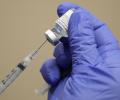
As the country eagerly awaits an expected coronavirus vaccination drive in January, at least 125 intended beneficiaries each in four states who had registered on the Co-WIN App were on Monday sent SMSes informing them about the time and place of their 'COVID-19 vaccination' under a mock-drill to administer the shots at designated centres.
